
Ingredients
The primary ingredients in beer brewing are water, malted grains, hops, and yeast. Together, they create the diverse flavors and styles of beer.
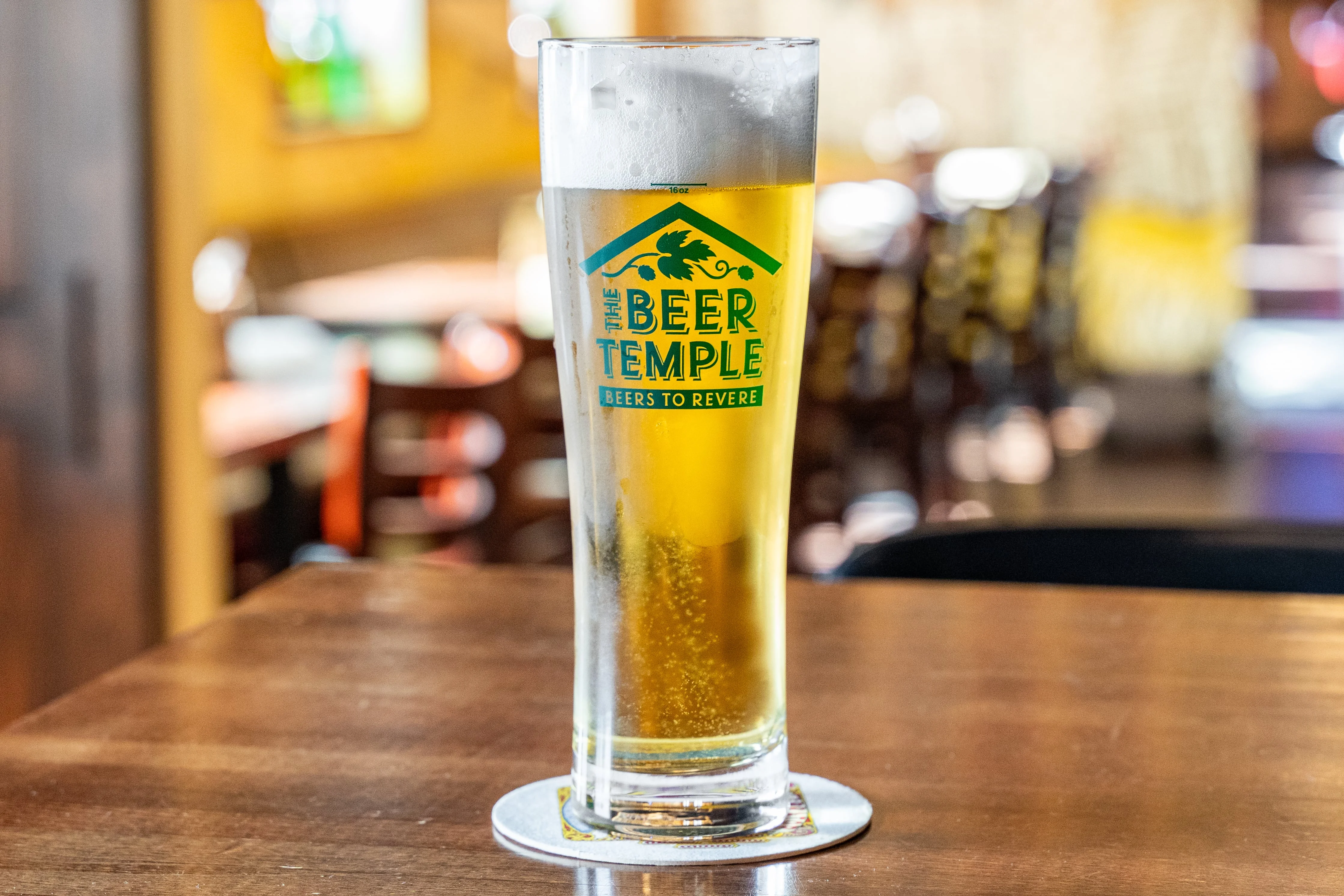
Beer is a deceivingly simple drink.
Typically, beer consists of just four ingredients: barley, hops, water, and yeast. However, by making small adjustments to these components or introducing additional elements, brewers have an endless array of options to create unique flavors and styles. The following section provides an overview of these brewing ingredients and their impact on the final beer product.
From Grain to Glass:
The Art of Beer Ingredients
Grains
Grains serve as the cornerstone of beer production, contributing flavor, aroma, color, and mouthfeel, as well as providing the sugars necessary for fermentation. While various grains like wheat, oats, corn, rice, and rye can be used in brewing, barley—especially malted barley—remains the preferred choice. As brewing expert Randy Mosher notes, barley is ideal for brewing due to its high starch content, essential enzymes for converting starch to sugar, and proteins that support yeast health. Its husks also function as a natural filter during brewing, preventing clogs that can occur with other grains. Some anthropologists even suggest that barley was domesticated around 10,000 years ago primarily for the purpose of brewing beer.
Water
Water is often overlooked when discussing beer ingredients, yet it constitutes over 95% of the final product. Far more than just a carrier for other ingredients, water significantly influences the taste of beer, depending on its mineral content. Historically, certain beer styles were tied to specific regions due to the unique characteristics of their water. For instance, Burton on Trent's high sulfate levels enhanced the bitter flavors in its beers, while Munich's carbonate-rich water promoted a soft mouthfeel for malt-forward brews like dunkel, but made hoppy beers taste harsh. Conversely, Plzen's nearly mineral-free water contributed to the clean taste of its renowned lagers. Today, advanced brewing technology allows brewers to analyze and adjust their water sources, with many larger breweries stripping minerals from their water and adding them back in precise amounts as part of their brewing process.
Hops
While grains are essential to beer, they can create an overly sweet brew if not balanced by other ingredients. Historically, various herbs were used to counteract malt sweetness, but for the last thousand years, hops have dominated this role. The bitter acids in hop cones effectively balance malt flavors, making beer more palatable, while also acting as a natural antibacterial agent that helps prevent spoilage—a crucial benefit before the advent of pasteurization. Beyond bitterness, hops contribute a wide range of flavors and aromas, from earthy to tropical. Interestingly, the methods for extracting bitterness and aroma from hops are distinct; boiling releases bitter alpha acids but diminishes volatile flavor oils, while cooler temperatures preserve these oils without dissolving the bitterness. This gives brewers significant control over a beer's hop character, allowing them to decide whether to emphasize maltiness with early hop additions or to highlight aromatics with late additions, often using a combination of both techniques.
Crystal Malt
The third major category of malts is crystal malts. Unlike other specialty malts, crystal malts are not kilned before roasting; instead, they are introduced to the roaster while still wet and are continually sprayed with water to maintain moisture during cooking. This unique process results in a rich, caramel-like flavor. Additionally, because of this roasting method, crystal malts contain some caramelized sugars that are no longer fermentable, contributing a distinct level of sweetness to the finished beer.
Other Ingredients
Beyond the primary ingredients of malt, water, hops, and yeast, brewers can enhance their recipes with a variety of additional substances. The Belgians are particularly skilled in this area, incorporating spices like coriander and the flavorful peel of curacao orange into their Witbiers. They also add fermentable sugars to their strong golden and dark ales to increase alcohol content while maintaining drinkability, and they often ferment with fruits like cherries or raspberries, as seen in the tart lambics from Brussels. In recent decades, American brewers have embraced this Belgian tradition of using adjuncts, leading to some of the most innovative and intriguing beers ever created.
Six Row vs. Two Row Barley
There are two main types of barley used in brewing: two-row and six-row, each offering unique characteristics suited for different beer styles.
Six-row barley has a higher enzyme content, making it ideal for American-style adjunct lagers, as adjunct grains typically lack enzymes necessary for sugar release.
Two-row barley, on the other hand, features plumper kernels with higher starch levels for conversion into fermentable sugars. It also has thinner husks and lower protein content, making it the preferred choice for all-malt beers.
Yeast
When asked to describe beer, most people would likely mention "alcohol" and "carbonated," both of which are produced by yeast. When yeast is introduced into unfermented beer (wort), it consumes the sugars from malt, converting them into alcohol while releasing carbon dioxide as a byproduct. In simpler terms, yeast consumes sugar, produces alcohol, and generates carbonation.
After consuming the sugars, yeast settles at the bottom of the fermentation tank, a process called "dropping bright." This is often enhanced by fining agents or mechanical filtering, resulting in a clear final product. Some beers are intentionally left in contact with yeast for added flavor or ongoing conditioning, which is indicated by the term "bottle conditioned." Such beers can develop their flavors over time.
**Ale vs. Lager:**
Yeast can be categorized into two main types: ale yeast (top-fermenting) and lager yeast (bottom-fermenting), which determine whether a beer is classified as an ale or a lager. Ales, which ferment at warmer temperatures (60-70°F), typically have fruity and spicy flavors due to the esters and phenols produced by the yeast. Conversely, lagers ferment at cooler temperatures (around 50°F), resulting in cleaner-tasting beers where malt and hops take precedence over yeast flavors.
Other Grains
While barley is the primary grain used in brewing, a variety of other grains can also be used, referred to as adjuncts. These adjuncts include wheat, rye, oats, rice, corn, and sorghum, and they are used to supplement barley in beer recipes, enhancing texture, head retention, aroma, and flavor.
Wheat
Wheat is the second most popular brewing grain after barley, integral to styles like Hefeweizen, Belgian Wit, and American Wheat ales. Wheat beers are characterized by creamy textures and large, fluffy heads of foam. Even in "non-wheat" beers, a small amount of wheat is often included to improve head stability.
Rye
Rye adds a unique, spicy flavor and aroma to beers. Although it was once popular in Germany and Northern Europe, rye has become less common in brewing due to its challenging nature, often turning mashes into a gummy consistency. It’s typically used in moderation, often alongside wheat, to achieve a spicy kick while also enhancing foam stability. Recently, rye has seen a revival in American craft breweries, where its peppery flavor is paired with hops.
Oats
Oats have a rich brewing history, fading in popularity until they found a niche in oatmeal stouts in the early 20th century. These beers were marketed for their nutritious qualities and gained popularity as a creamy, rich style. Oats contribute to head stability and offer a slick, oily mouthfeel.
Rice and Corn
Rice and corn are widely used adjuncts, often associated with mass-produced lagers, as they provide alcohol without adding much flavor. While some beer enthusiasts may look down on these grains, they can also be used creatively by craft brewers. For instance, wild rice can yield flavorful and unique beers, demonstrating that these adjuncts can contribute positively to a brew, even if their presence is often subtle.
Malting Process
When discussing beer ingredients, the term "malted barley" is often preferred over simply saying "barley." This distinction highlights the importance of the malting process, which is essential for making the grain digestible for brewer's yeast. Without malting, barley would contain complex sugars, or starches, that yeast cannot ferment. Through malting, enzymes in the grain are activated, allowing the breakdown of these complex sugars into simpler sugars like maltose, which yeast can ferment effectively.
The malting process begins with soaking the grains in water to hydrate them, typically over a period of one to two days. After soaking, the grains are aerated to encourage germination. This is when the barley grains begin to sprout, and the first indication of this is the appearance of a small rootlet. The length of this rootlet is crucial, as it reflects the progress of germination; a longer rootlet indicates that the barley is developing properly.
Once the rootlet reaches the length of the kernel, the malt is considered fully modified. This stage indicates that the necessary enzymes are present and that starches have started to convert into simpler sugars. At this point, the maltster must promptly heat the grains to stop the germination process. If the heating occurs too early, some starches will remain, resulting in undermodified malt. Conversely, if the process is not halted soon enough, the barley may consume some of its own sugars, leading to overmodified malt.
Following the drying of the kernels, the maltster applies heat to toast the grains, which imparts color and flavor to the beer. The degree of toasting directly affects the final product: lighter toasts yield lighter colors and flavors, while darker toasts produce richer colors and fuller profiles.
Base malts, which are the lighter malts, form the majority of the grain bill in most beers. Even darker styles, such as Imperial Stouts, typically include a significant portion of base malts. These malts are usually dried quickly and at lower temperatures. Common examples of base malts include pale, Pilsner, Vienna, and Munich malts.
In contrast, specialty malts are darker and offer more robust flavors compared to base malts. These malts start like base malts but undergo roasting after kilning. Short roasting times yield toasted malts that contribute rich, biscuity flavors, while extended roasting produces roasted malts with intense coffee and chocolate characteristics. Specialty malts can greatly influence the flavor profile of a beer, with even small amounts of heavily roasted malts, like black malt, having a pronounced impact. Interestingly, even lighter beers such as Budweiser may include a hint of black malt to enhance their color.